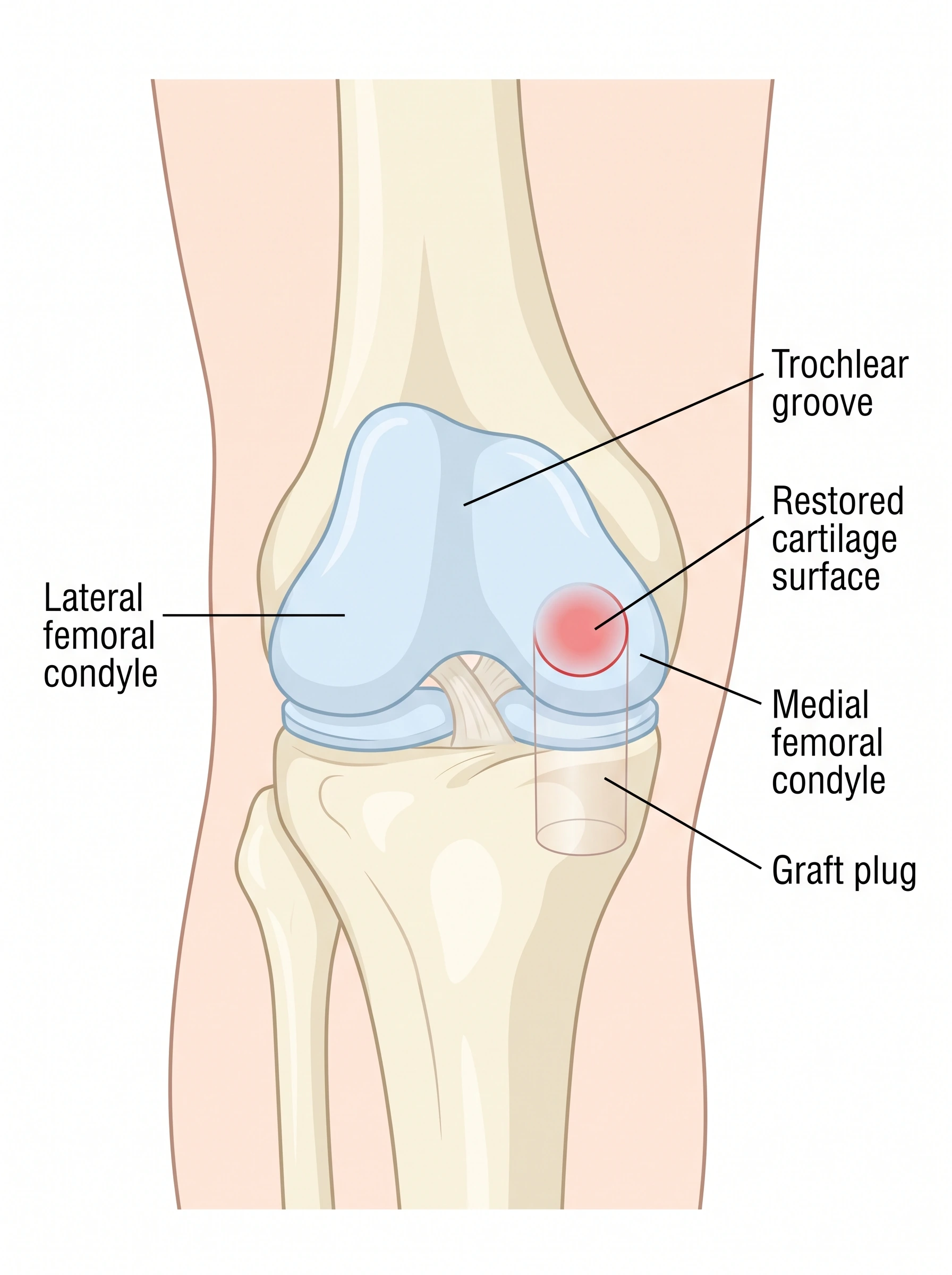
Cartilage restoration is a group of procedures that rebuild or replace damaged cartilage in the knee, often in younger, active people with a focused area of damage. The goal is to relieve pain and protect the joint. Recovery is gradual and protects the healing surface for months.
William Rossy performs cartilage restoration in Princeton when it is the right step, and reviews every alternative with you first.
What is Cartilage Restoration?
Cartilage restoration refers to several procedures that repair or replace damaged cartilage inside the knee.
Cartilage is the smooth, slippery surface that caps the ends of bones and lets the joint glide without pain. Unlike skin, cartilage has little blood supply, so it does not heal well on its own once it is damaged. A focused area of damage is sometimes called a chondral lesion, meaning a defect in the cartilage.
These procedures aim to fill or replace that damaged area so the joint surface is smoother and better protected. They are most often considered for younger, active people who have a focused area of cartilage damage in an otherwise healthy knee, rather than widespread arthritis. Several techniques exist, and the right one depends on the size and location of the damage. Your surgeon will match the method to your knee.
This is a deep-education page. For a shorter overview, see our Cartilage Restoration service page, which links back here.
What are the symptoms of Cartilage Restoration, and when should you see a specialist?
Cartilage damage can cause symptoms that feel like other knee problems.
Common signs include the following.
- Pain in a specific spot, often worse with weight-bearing or stairs. - Swelling that comes and goes with activity. - Catching or a feeling that something is loose inside the knee. - A history of a knee injury or an old injury that never fully settled. - A sense that the knee is not tracking or moving smoothly.
See a specialist when knee pain and swelling persist, especially after an injury, or when a specific spot keeps flaring. An orthopedic surgeon can tell whether the problem is a focused cartilage defect that might respond to restoration, or broader arthritis, which is managed differently. Younger, active people with a single defect are often the best-suited candidates.
How is Cartilage Restoration diagnosed, and what does the visit involve?
The surgeon asks about past injuries and where the pain and swelling sit.
The exam checks the joint line, kneecap tracking, and areas of tenderness, and looks for catching.
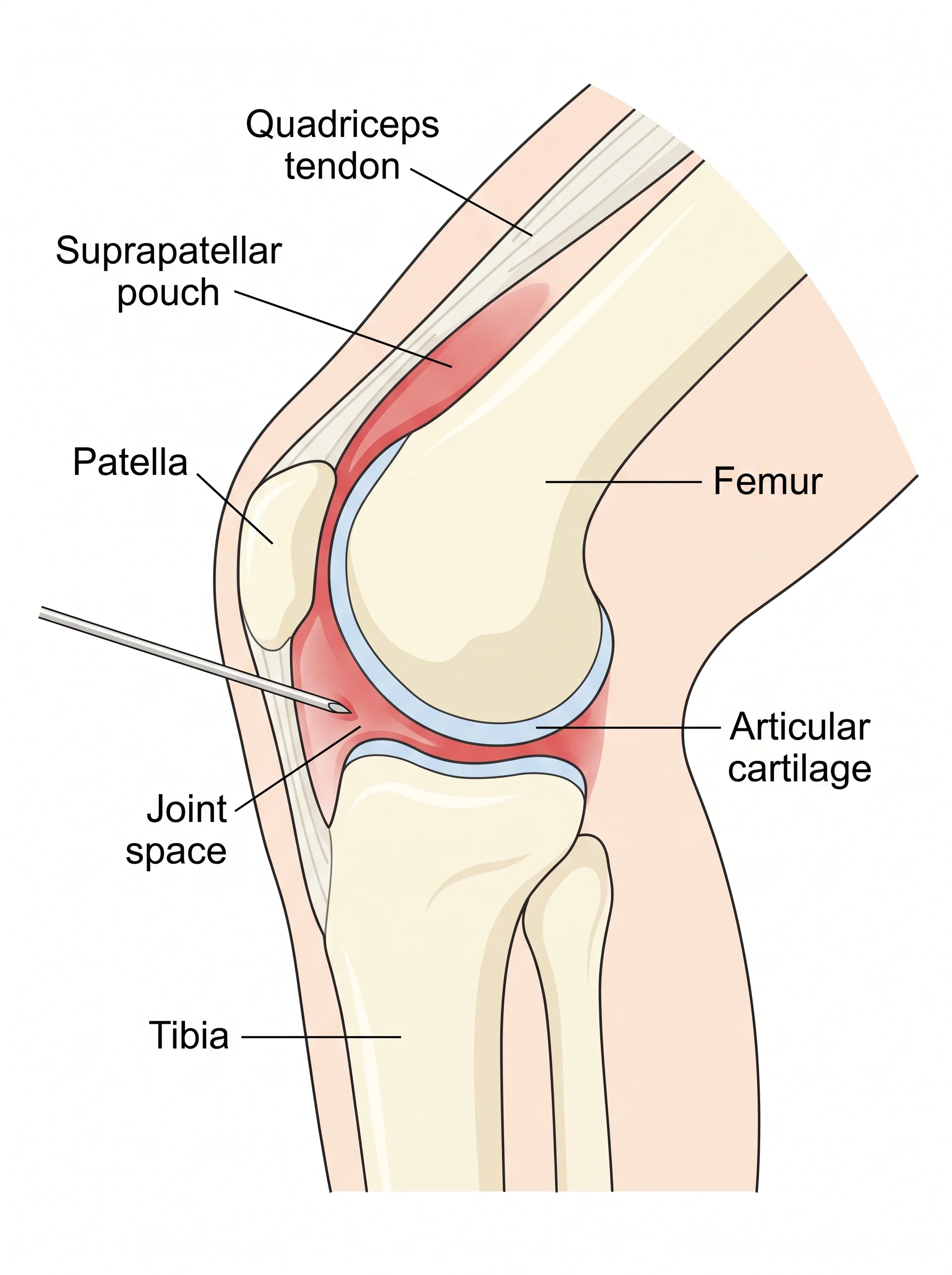
X-rays check the bones and joint space. An MRI (a soft-tissue scan) is central here because it shows the cartilage surface and can reveal the size and depth of a defect. Sometimes the full picture is only clear during arthroscopy, when the surgeon sees the surface directly. The surgeon combines the exam, imaging, and your activity goals to decide whether restoration is a fit and which technique suits the defect.
What happens during Cartilage Restoration, step by step?
The exact steps depend on which technique is chosen, and some techniques involve two stages.
In general, the sequence is the following.
- Anesthesia. An anesthesiologist gives you medicine so you feel nothing, general anesthesia or a regional block. - Inspection. The surgeon uses an arthroscope through small cuts to see the defect and confirm its size and depth. - Preparing the area. The damaged cartilage is cleaned to a stable edge so new tissue or a graft can take hold. - Restoring the surface. Depending on the technique, the surgeon may stimulate the bone to grow repair tissue, transfer healthy cartilage and bone from another area, or place cells or a graft into the defect. Some cell-based methods are done in two surgeries, spaced apart. - Checking and closing. The surgeon confirms the surface is covered and secure, then closes the cuts.
Because approaches vary, your surgeon will walk you through the specific steps planned for your knee, and how many stages it involves.
What is the recovery timeline for Cartilage Restoration?
Cartilage takes a long time to mature, so recovery protects the healing surface for months.
Milestones matter more than the calendar, and pushing weight or activity too early can harm the repair. The ranges below reflect general AAOS guidance, 2023. These are ranges, not promises.
First weeks. The milestone is protecting the repair. You may limit how much weight you put on the knee and use a brace or a machine that gently moves the knee, following your surgeon's plan. Swelling is managed with rest and ice.
Six weeks to three months. The milestone is gradually increasing weight-bearing and motion as the surface heals, with steady, careful strengthening in therapy.
Three to six months. The milestone is returning to fuller daily activity and low-impact exercise as strength returns.
Six months to a year or more. The milestone is returning to higher-demand activity or sport, cleared by strength, function, and how the repair has healed, not the calendar alone. General AAOS guidance, 2023, notes that cartilage procedures often require many months before higher-impact activity, but this is a range, not a promise.
Physical therapy is essential and carefully paced.
Read the full guide to preparing for surgery →
Your own recovery instructions come from the office and are specific to you. This page describes the general course, not a plan to follow.
How should you prepare for Cartilage Restoration?
A little preparation makes the visit more useful.
- Home setup. Prepare a rest area with leg elevation and ice, and clear paths for crutches, since weight limits are common early. - Transportation. Arrange rides, since you cannot drive for a time. - Time off. Plan time away from work based on your job and your weight-bearing limits, which can be significant early on. - Who to have available. Have someone with you the first days and, if a machine or brace is used, someone to help you get set up. - Pre-surgery health. Share your medicine list and follow any pausing instructions.
Which warning signs should you call about?
Call the office if you notice the following.
- Fever, or redness, warmth, or drainage at an incision, which can signal infection. - Calf pain or new leg swelling, which can signal a blood clot. - Sudden chest pain or trouble breathing. Call 911. - Swelling or pain that keeps worsening. - A new locking or giving-way of the knee.
When unsure, call the office. For emergencies, call 911.
What results can you expect from Cartilage Restoration?
According to general AAOS guidance, 2023, cartilage restoration can relieve pain and improve function for well-selected people, meaning younger, active patients with a focused defect in an otherwise healthy joint.
The same guidance, AAOS, 2023, notes that results vary by technique, defect size, and location, and that these procedures are not a treatment for widespread arthritis. These are group findings, not promises about any one person.
The office can explain what the evidence means for your specific knee and the technique planned.
Who performs cartilage restoration: a complete guide in Princeton?
William Rossy is a board certified orthopedic surgeon who performs cartilage restoration: a complete guide in Princeton, NJ. Fellowship trained at Harvard-Massachusetts General Hospital (Sports Medicine Fellowship). Dr. Rossy sees patients at the practice in Princeton; appointments can be requested through this site.
What do patients ask most?
Is this the same as a knee replacement?+
Who is a good candidate?+
Why is recovery so long?+
Will one surgery be enough?+
How do I handle insurance and cost questions?+
How do payments work?
Contact the office to confirm insurance participation.
Fellowship trained at Harvard-Massachusetts General Hospital (Sports Medicine Fellowship). Sees patients in Princeton.
About Dr. Rossy →